
Side Dishes
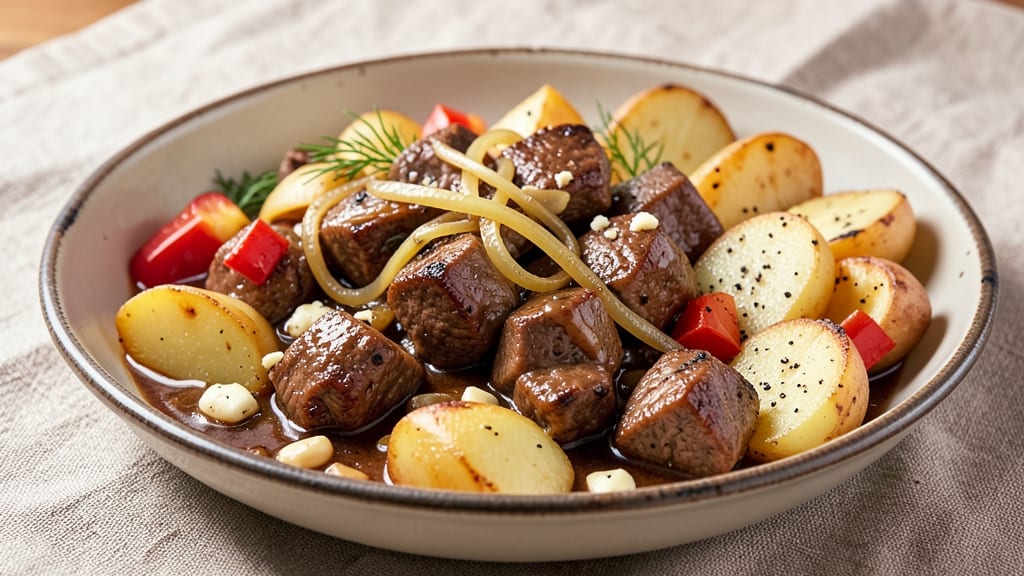
This beef stroganoff with potatoes recipe delivers the ultimate one-pan comfort dish—rich, creamy sauce meets tender beef and crispy-edged potatoes. The secret lies in browning the beef properly and building the sauce from scratch, where sour cream and mustard create that signature tangy depth.
I’ve perfected this version to balance hearty flavors without heavy cream, making it both indulgent and approachable.
The beauty of this dish is its simplicity: one pan, minimal cleanup, and a method that ensures crispy potato edges while keeping the centers fluffy. You’ll start by searing the beef until deeply browned—this step unlocks the rich, caramelized foundation for the sauce.
Meanwhile, the potatoes absorb garlic butter and roast until golden, adding texture that cuts through the creaminess.
What you’ll end up with is a creamy stroganoff so satisfying it feels like a restaurant meal, but with the ease of a home-cooked dish. The sauce clings to the beef and potatoes, while the crispy edges add a delightful contrast.
Serve it over buttery egg noodles or crusty bread to soak up every last drop of that velvety sauce.
This recipe works equally well for a weeknight dinner or a cozy gathering—just scale the ingredients to your needs. The key is patience in browning the beef and letting the sauce simmer until thickened. Trust me, the results are worth every minute of effort.
Ingredients for beef stroganoff with potatoes
Rich beef, crispy potatoes, and velvety sauce—just 15 ingredients for restaurant-quality comfort.
| Ingredient | Amount | Notes |
|---|---|---|
| Beef Chuck Roast 🥩 | 1 ½ lb | Cut into 1-inch cubes |
| Yellow Onions 🧅 | 1 whole | Sliced into 1/2-inch strips |
| Red Bell Pepper 🌶️ | 1 whole | Diced, any color |
| Russet Potatoes 🥔 | 1 ½ lb | Cut into 1-inch chunks |
| Garlic Cloves 🧄 | 4 cloves | Minced, fresh preferred |
| Unsalted Butter 🧈 | 4 tbsp | Full-fat for richness |
| All-Purpose Flour 🌾 | 2 tbsp | For sauce thickening |
| Beef Broth 💧 | 1 cup | Low-sodium preferred |
| Sour Cream 🥛 | ½ cup | Full-fat for creaminess |
| Dijon Mustard 🍯 | 1 tbsp | For tangy depth |
| Dry White Wine 🍷 | ½ cup | Substitute with broth |
| Fresh Thyme Leaves 🌿 | ¼ cup | Or 1 tsp dried thyme |
| Salt 🧂 | 1 ½ tsp | Kosher or sea salt |
| Ground Black Pepper 🌶️ | ½ tsp | Freshly ground preferred |
| Vegetable Oil 🫒 | 1 tbsp | For searing beef |
The beef is non-negotiable for depth. Chuck roast delivers that signature beefy flavor, while sirloin or ribeye stays too lean. Most grocery stores carry it pre-cubed, but if buying whole, trim excess fat and cut into uniform 1-inch pieces. For sour cream, full-fat is essential—low-fat versions won't give that luxurious texture. The potatoes should be Russet or Yukon Gold; their natural starch creates that perfect crispy edge. Fresh thyme is ideal, but dried works at one-third the amount if you're in a pinch. Grab a bottle of Sauvignon Blanc or Pinot Grigio for the wine—dry and crisp cuts through the richness.
No white wine? Beef broth with a splash of apple cider vinegar works beautifully. The flour is purely for thickening—don't skip it, but if you're gluten-free, cornstarch or arrowroot powder does the job just as well. For the mustard, Dijon is key—it balances the sour cream's tang without overpowering. The bell pepper adds sweetness that rounds out the dish; red or yellow both work. If you're prepping ahead, brown the beef and potatoes first, then refrigerate them separately until ready to build the sauce. This keeps your kitchen from getting too smoky while you cook.
This dish reheats beautifully—just add a splash of broth or water to loosen the sauce. Store in airtight containers for up to 5 days in the fridge, or freeze for 3 months. For crispy potato edges, par-cook them slightly before adding to the pan. The sauce thickens as it cools, so if it seems too thin when first made, let it sit for 10 minutes before serving. Leftovers taste even better the next day as flavors meld. Serve over egg noodles or crusty bread to soak up every last bit of that creamy goodness.
Why You'll Love This Recipe
- One-Pot Wonder: I swear by this—just one skillet, no extra pans. You brown the beef, toss in the onions and peppers, add the potatoes later, and let everything meld together. The potatoes soak up all that rich sauce like sponges, so you’re not left with dry, sad leftovers.
- Creamy Without the Hassle: That velvety mushroom-beef sauce? It’s the star. The slow-cooked chuck roast practically melts in your mouth, while the sour cream and mustard cut through the richness. Honestly, the first time I made it, I ate it straight from the pan with a spoon—no joke.
- Weeknight to Potluck Hero: This dish is my go-to when I’m too tired to think. But here’s the secret: it’s also the dish everyone asks for at gatherings. Serve it with crusty bread for soaking up sauce, or pack it for lunch the next day. My college roommate still texts me for the recipe whenever she hosts.
- Budget-Friendly Feast: A chuck roast stretches further than you’d think, especially when paired with potatoes. I’ve made this feed six people for under $20—and the leftovers are just as good cold the next day. (Yes, even on a Tuesday night.) Plus, the potatoes add bulk without breaking the bank.
Step-by-step instructions for beef stroganoff with potatoes
Here's how to create a rich, comforting beef stroganoff with perfectly crispy potato edges in one pan.
Sear the Beef Chuck Roast
Heat a large Dutch oven over medium-high heat and add the 1 tablespoon vegetable oil. Once shimmering, add the 1.5 lb beef chuck roast cut into 1-inch cubes, working in batches if needed to avoid crowding. Let each piece sear undisturbed for 3-4 minutes until deeply browned on all sides—this builds rich flavor and creates crispy edges.
Real talk: Don't rush this step. You'll know it's ready when the beef releases easily from the pan and has a caramelized crust. Season each batch with ½ teaspoon salt and ¼ teaspoon ground black pepper as you work. Remove the beef and set aside on a plate, leaving all the browned bits in the pan—those are pure flavor.
Cook the Potatoes and Build the Sauce Base
In the same Dutch oven, reduce heat to medium and add 2 tablespoons vegetable oil if needed. Add the 1.5 lb russet potatoes cut into 1-inch chunks and the 1 whole yellow onion sliced into ½-inch strips. Cook for 8-10 minutes, stirring occasionally, until the potatoes begin to soften and the onions turn translucent.
Add the 1 whole red bell pepper diced and 4 cloves garlic cloves minced, cooking for another 3-4 minutes until the vegetables soften and the garlic becomes fragrant. Sprinkle in the 2 tablespoons all-purpose flour and stir vigorously for 1 minute to remove any raw flour taste. This creates a smooth base for your sauce.
Deglaze and Simmer the Sauce
Pour in the ½ cup dry white wine and scrape up all the browned bits from the bottom of the pan with a wooden spoon. Let the wine reduce by half (2-3 minutes), then add the 1 cup beef broth and 1 tablespoon Dijon mustard. Bring to a gentle simmer and return the beef to the pot, along with any accumulated juices.
Add the ¼ cup fresh thyme leaves and 1 teaspoon salt, then cover and let the mixture simmer gently for 20-25 minutes until the beef is tender and the potatoes are fork-tender. Here's the thing—don't skip the thyme. It adds that subtle earthy depth that makes this dish truly comforting. Stir occasionally to prevent sticking.
Finish with Creamy Richness
Reduce heat to low and stir in the 4 tablespoons unsalted butter, allowing it to melt completely into the sauce. Add the ½ cup sour cream and ½ teaspoon ground black pepper, stirring gently to combine. The sauce should coat the back of a spoon with a velvety texture. Taste and adjust seasoning with additional salt if needed—this is where you ensure the balance of creamy, tangy, and savory flavors.
For the crispy edges you crave, transfer the stroganoff to a serving dish and let it rest for 5 minutes uncovered. This allows the top layer to develop a slight crust while keeping the interior creamy. Garnish with additional fresh thyme leaves if desired and serve immediately with crusty bread or over buttered egg noodles.
Pro Tips For Making Beef Stroganoff With Potatoes
- CRISP THE POTATOES FIRST: I used to toss raw potatoes into the stroganoff sauce like everyone else—big mistake. Instead, parboil them for 8 minutes, then crisp them in a dry pan with a splash of butter until golden. The texture contrast makes all the difference, and they won’t turn to mush when the sauce finishes.
- SEAR THE BEEF IN BATCHES: That chuck roast won’t brown evenly if you crowd the pan. Cut it into 1-inch chunks and work in batches—no more than 2 minutes per side—until you’ve got deep, caramelized crusts. Overcrowding steams the meat instead of searing it, and trust me, you’ll taste the difference.
- SWEAT THE ONIONS LOW AND SLOW: After burning three batches of onions, I finally learned: cook them on medium-low heat for 10 minutes until translucent but not browned. Rushed onions add bitterness to the sauce, and nobody wants that competing with the beef. A damp paper towel over the pot helps too—keeps them from sticking like glue.
- DEGLAZE WITH BEER AND BROTH: Skip the quick splash of water after searing—the beef fond needs real flavor. Use ½ cup of dark beer (like stout) first to loosen those browned bits, then add ½ cup beef broth. The beer adds depth, and the broth cuts the richness without thinning the sauce too much. (Yes, even if you’re not a beer drinker.)
Troubleshooting perfect results
Sauce Too Thin?
If your stroganoff sauce turns out too thin, don’t panic—simmering is your best friend. Reduce the heat to low and let it cook uncovered for 5-10 minutes, stirring occasionally. The moisture will evaporate, thickening the sauce naturally.
For an instant fix, mix 1 teaspoon cornstarch with 1 tablespoon cold water, stir into the sauce, and simmer for 2 minutes until it reaches the desired consistency. 💫
Potatoes Staying Soggy
Soggy potatoes ruin the texture contrast you’re after. To prevent this, par-cook them first: Boil the potato chunks in salted water for 5 minutes until slightly tender, then drain and pat dry. Add them to the pan after searing the beef but before deglazing.
The residual heat will crisp the edges while keeping the centers fluffy. For extra insurance, toss them in 1 tablespoon flour before adding to the pan. ✨
Beef Overcooking
Tough beef is a common stroganoff fail, but timing is key. Use a meat thermometer to pull the beef at 160°F internal temperature—it’ll finish cooking in the sauce.
If your beef is overcooked, try this trick: Add 2 tablespoons beef broth to the pan and cover tightly for 5 minutes off the heat. The steam will rehydrate the fibers slightly. For next time, cut your beef into slightly larger chunks (1.25 inches) to reduce cooking time. 🔥
Sauce Breaking or Curdling
Adding sour cream too early or to a hot sauce causes curdling. Always stir in the ½ cup sour cream over low heat and remove the pan from heat if it starts to bubble. If it curdles, whisk in 1 tablespoon cold butter to smooth it out.
For a foolproof method, temper the sour cream first: Mix 2 tablespoons cold sauce with the sour cream before adding it back to the pot. This gradual introduction prevents separation. 💡
Lacking Depth of Flavor
If your stroganoff tastes flat, it’s likely missing the Maillard reaction or proper seasoning layers. Double-check your searing—beef should be deeply browned, not just cooked. Boost umami by adding 1 teaspoon soy sauce or ½ teaspoon Worcestershire sauce to the deglazing liquid.
For extra richness, finish with 1 tablespoon heavy cream or a splash of balsamic vinegar (just 1 teaspoon) to brighten the sauce. 🌟
Wine Substitutes Gone Wrong
If you skipped the wine, don’t just use broth—it’ll dilute the sauce. For a dry white wine substitute, mix ½ cup beef broth with 1 tablespoon lemon juice or apple cider vinegar.
For a red wine version, use ½ cup beef broth with 1 teaspoon balsamic vinegar. Always deglaze with enough liquid to scrape up the browned bits—this is where 80% of the flavor lives. If using vinegar, reduce the mustard to ½ tablespoon to balance acidity. 🍷
Nutrition facts
Frequently asked questions
Can I make this beef stroganoff ahead of time?
This dish actually tastes better the next day as flavors meld. Store in an airtight container for up to 5 days in the fridge. Reheat gently on the stove with a splash of beef broth to restore creaminess. For freezing, portion before adding sour cream and freeze for up to 3 months. Thaw overnight in the fridge and finish with fresh sour cream when reheating.
What's the best way to serve this stroganoff?
This creamy stroganoff pairs perfectly with buttered egg noodles or crusty bread to soak up the sauce. For a restaurant-style presentation, serve over a bed of wide noodles with a sprinkle of fresh thyme. The crispy potato edges add great texture contrast. If you prefer lighter sides, try roasted asparagus or a simple green salad to balance the richness.
Can I substitute chicken or mushrooms for the beef?
While traditional stroganoff uses beef, you can adapt it! For chicken, use bone-in thighs cut into chunks and cook until golden (about 6-7 minutes per side). For mushrooms, use cremini or portobello sliced thickly—sauté until deeply browned before adding to the sauce. The cooking time will be shorter, so adjust to 15-20 minutes total. The sauce will still work beautifully, though the flavor profile changes.
Why does my stroganoff sauce sometimes split?
Sauce splitting happens when sour cream hits hot liquid too quickly. Always stir in the sour cream over low heat or even off the heat. For extra insurance, temper it first by mixing 2 tablespoons cold sauce with the sour cream before adding it back. If it does split, whisk in 1 tablespoon cold butter to smooth it out. The key is gradual temperature adjustment—never add cold dairy to hot liquids!