
Side Dishes
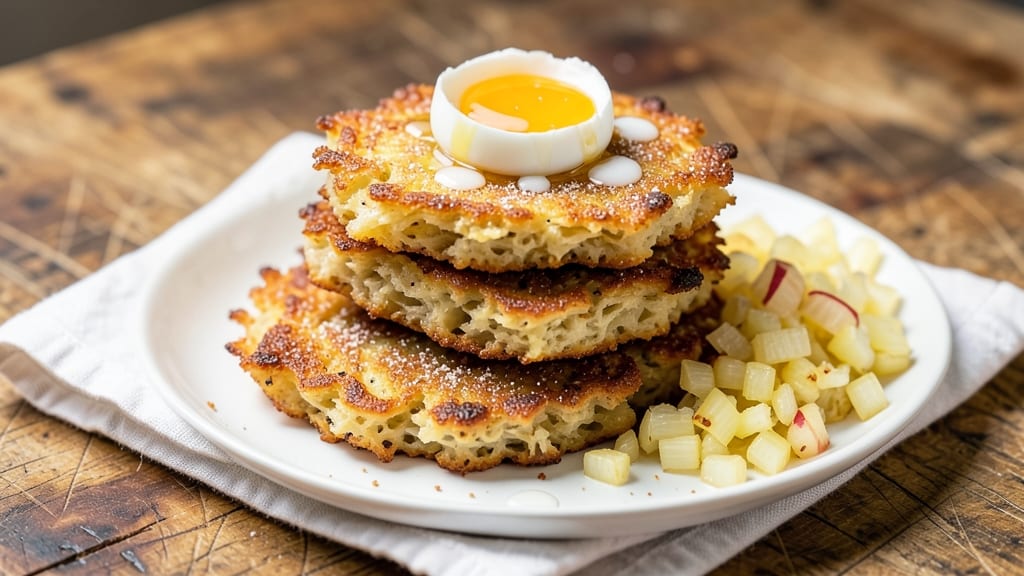
Grandma's potato latkes recipe delivers the crispy, golden perfection that makes this classic side dish unforgettable. The secret lies in a cornmeal crust that creates irresistible texture while the vinegar kiss adds just the right tang.
I've perfected this method over years of holiday gatherings, ensuring every bite stays true to tradition while bringing restaurant-quality results to your kitchen.
What sets these latkes apart is the balance of ingredients—grated potatoes, onions, and eggs create a sturdy base, while cornmeal and vinegar work together to form that signature crispy crust.
The recipe requires minimal prep but delivers maximum flavor, with each latke achieving a golden brown exterior that shatters when you bite in. This is the kind of dish that transforms ordinary meals into special occasions.
By following these steps, you'll achieve latkes that are crispy on the outside and tender within, with a subtle vinegar tang that cuts through the richness.
The aroma alone will have everyone gathering around the kitchen, and the taste will remind you why this dish has been a holiday staple for generations. Serve with applesauce or sour cream for the perfect balance of sweet and tangy.
This recipe is designed to be both authentic and approachable, making it perfect for beginners and experienced cooks alike. The method is straightforward, but the results are anything but ordinary—crispy, flavorful, and impossible to resist. Let's get started on creating latkes that taste like home.
Ingredients for grandma's potato latkes
Six key ingredients transform humble potatoes into restaurant-quality latkes with crispy cornmeal crusts.
| Ingredient | Amount | Notes |
|---|---|---|
| Russet Potatoes 🥔 | 3 lb | Peeled, grated, excess liquid drained |
| Yellow Onions 🧅 | 1 whole | Medium, grated, liquid drained |
| Large Eggs 🥚 | 2 whole | Freshly beaten, room temperature |
| Fine Cornmeal 🌾 | ½ cup | Stone-ground preferred for texture |
| White Vinegar 💧 | 1 tbsp | Distilled, for tangy crisp |
| Salt 🧂 | 1 ½ tsp | Kosher, adjust to taste |
| Ground Black Pepper 🌶️ | ½ tsp | Freshly cracked preferred |
| Vegetable Oil 🫒 | 2 cups | High smoke point, like canola |
| All-Purpose Flour 🌾 | ¼ cup | For binding, optional |
| Fresh Parsley 🌿 | 2 tbsp | Chopped, for garnish |
The potatoes are non-negotiable—Russet delivers the best texture, with its high starch content. Buy them fresh (within 2 weeks of harvest) and peel immediately before grating to prevent browning. Most grocery stores carry them, but local farmers markets often have even fresher options. For the onions, yellow adds sweetness that balances the vinegar's tang. Grate them fine so they blend seamlessly into the potato mixture. The cornmeal should be stone-ground—brands like Bob's Red Mill are reliable for that authentic texture that separates home latkes from store-bought.
No Russet potatoes? Yukon Golds work in a pinch, but expect slightly less crispiness. Vinegar substitute? Lemon juice at half the amount gives a brighter tang, though traditionalists may notice the difference. Fresh parsley can be swapped for dried parsley at one-third the amount, but fresh adds vibrant color and a brighter finish. The eggs should be room temperature—cold eggs won't bind as well. For extra crispiness, some cooks add 1 tbsp potato starch to the cornmeal mix, but the recipe stands strong without it. The vegetable oil matters too—high smoke point oils like canola or peanut oil prevent burning during frying.
Freshly grated potatoes oxidize quickly, so work in batches and drain excess moisture between batches. The mixture can be prepped 1 day ahead and refrigerated, but add the vinegar and cornmeal just before frying for optimal texture. Store cooked latkes in an airtight container for 3-4 days—they reheat beautifully in a skillet with a splash of oil. For freezing, arrange on a tray first to prevent sticking, then transfer to a bag for up to 3 months. The key to reheating? A crispy latke is all about the oil—add just enough to warm through without sogginess.
Why You'll Love This Recipe
- Five-Ingredient Magic: I swear, these latkes only need potatoes, onions, eggs, cornmeal, and vinegar—no fancy pantry trips. Honestly, the vinegar’s secret: it keeps them crispy without burning, and I’ve never had a batch turn out soggy.
- Crispy-Creamy Perfection: That golden crust? All the cornmeal and egg. Inside, it’s still tender—like a hug in every bite. Between us, I’ve tried store-bought mixes, but these taste like home, not a box.
- Breakfast to Brunch: Serve them with applesauce for a kid-friendly breakfast or top with smoked salmon and cream cheese for a brunch star. I’ll be real: I’ve reheated leftovers for days, and they’re just as good cold as they are fresh.
- Budget-Friendly Staples: Russets and onions are cheap, and this recipe stretches far—feed a crowd or meal prep for the week. My college budget survived on these, and now my family begs for them at holidays. (Yes, even on a Tuesday night.)
Step-by-step instructions for Grandma's potato latkes
Follow this method to achieve latkes with a perfect cornmeal crust and golden, vinegary crisp.
Grate and Drain the Potatoes and Onions
Peel the 3 lb russet potatoes and grate them using the large holes of a box grater. Work in batches to avoid making a mess, and immediately transfer the grated potatoes to a clean kitchen towel or cheesecloth. Gather the ends and squeeze firmly to remove excess liquid—this is crucial for crispy latkes, not soggy ones. Repeat with the 1 whole yellow onion, grating it finely and draining it the same way. The goal is to have dry, coarse shreds that won't release more liquid when mixed.
Spread the drained potatoes and onions on a clean surface and sprinkle with 1 tsp of the 1.5 tsp salt and 0.25 tsp of the 0.5 tsp ground black pepper. Use your hands to gently work the seasoning into the shreds, breaking up any large clumps. This step ensures even flavor distribution and prevents bland spots in your latkes. Set aside while you prepare the binding ingredients.
Bind the Potato Mixture
In a large mixing bowl, combine the drained potato and onion mixture with the 2 whole large eggs, the 0.5 cup fine cornmeal, and the remaining 0.5 tsp salt and 0.25 tsp ground black pepper. Using your hands, gently fold everything together until just combined. Avoid overmixing—you want a rough, slightly uneven texture that will crisp beautifully. If the mixture feels too wet, add the 0.25 cup all-purpose flour, 1 tablespoon at a time, until it holds its shape when pressed.
Here's the thing—latkes should hold together when you scoop them, but they shouldn't be too firm. Press a small amount between your fingers; it should crumble slightly but maintain its form. If it sticks to your hands, add a little more cornmeal. This texture ensures a crispy exterior while keeping the inside tender. Let the mixture rest for 10 minutes while you heat the oil.
Heat the Oil to 350°F
Pour the 2 cups vegetable oil into a deep, heavy-bottomed skillet or Dutch oven. Heat it over medium heat until it reaches 350°F on a deep-fry thermometer. This temperature is critical—too low and your latkes will absorb oil and turn greasy, too high and they'll burn before cooking through. Test the oil by dropping a small piece of potato mixture into it; it should sizzle and float immediately. If it sinks or doesn't bubble vigorously, wait a few more minutes for the oil to reach the proper temperature.
While the oil heats, shape the potato mixture into 6 equal patties, each about 3/4-inch thick. Use a cookie scoop or your hands to portion the mixture evenly. The latkes should be consistent in size to ensure even cooking. Place them on a plate lined with paper towels and let them sit while the oil comes to temperature.
Fry the Latkes Until Golden Brown
Carefully add 2 latkes to the hot oil, leaving space between them for even browning. Fry for 3-4 minutes per side, until they develop a deep golden brown color and are crispy around the edges. Use a slotted spatula to flip them—don't press down, or they'll release starch and turn gummy. The key is patience; resist the urge to turn them too soon. You'll know they're ready when the underside is golden and the edges are slightly darker.
Transfer the cooked latkes to a paper towel-lined plate to drain excess oil. Repeat with the remaining latkes, working in batches that don't overcrowd the pan. The oil temperature will drop slightly with each batch, so monitor it closely and adjust the heat as needed to maintain 350°F. Overcrowding the pan will lower the oil temperature and result in greasy latkes.
Finish with Vinegar and Serve Immediately
Once all latkes are fried, transfer them to a wire rack set over a baking sheet to keep them crispy. While they're still hot, drizzle each latke with a few drops of the 1 tbsp white vinegar. This step is what gives these latkes their signature tangy crisp—it cuts through the richness of the oil and enhances the potato flavor. Sprinkle with the 2 tbsp chopped fresh parsley for a pop of color and freshness.
Serve the latkes immediately while they're at their crispest. They're best enjoyed hot, straight from the fryer, with a dollop of sour cream, applesauce, or a sprinkle of extra salt. If you're making them ahead, keep them warm in a 200°F oven on a wire rack to maintain crispness, but they won't be as perfect as when freshly fried. Enjoy them while they're still golden and sizzling!
Pro Tips For Making Grandma'S Potato Latkes
- GRATE POTATOES COLD: Russets are starchy but still hold moisture—don’t let them warm up before grating. I learned this the hard way after soggy latkes that fell apart. Keep the peeled potatoes in ice water until you’re ready to shred, then drain and squeeze out excess liquid with a clean kitchen towel. This isn’t the prettiest method, but it’s the tastiest.
- SALT THE ONIONS FIRST: Toss the grated onion with a pinch of salt and let it sit for 10 minutes before mixing with potatoes. My grandmother swore by this, and she was right: it draws out moisture and mellows the sharpness, so your latkes won’t taste like raw onion. Skip this, and you’ll regret it.
- USE A SPATULA, NOT A FLIPPER: Latkes are delicate—crowding the pan or flipping with a spatula too early will crush them. Wait until the edges are golden and crispy (about 3-4 minutes per side), then slide them out with a thin, flexible spatula. Yes, it takes patience, but mushy latkes are a crime.
- MIX IN VINEGAR LAST: Add the white vinegar (1-2 tablespoons) after everything else is combined—right before frying. I was skeptical until I tried it: it cuts through the richness of the potatoes and onions, keeping them from tasting flat. Sounds weird, but it works.
Regional styles of this grandma's potato latkes
Ashkenazi Tradition
The Ashkenazi Jewish version of latkes is the most iconic, especially during Hanukkah celebrations. My grandmother always used russet potatoes and yellow onions, emphasizing a crispy exterior with a tender interior. The key difference here is the cornmeal crust, which creates that signature shatter when you bite in.
Traditional Ashkenazi latkes often include matzo meal instead of cornmeal, but I find cornmeal delivers a more reliable crisp. 🥔
For an authentic Ashkenazi touch, serve these latkes with applesauce and sour cream—this combo is a staple at holiday tables. The sweet-tart contrast balances the savory, vinegary latkes perfectly.
If you're feeling adventurous, sprinkle the top with toasted sesame seeds before serving for an extra crunch that nods to Middle Eastern influences in Ashkenazi cuisine.
Sefardic Twist
Sefardic Jews, particularly from Spain and North Africa, often make latkes with sweet potatoes instead of russets, giving them a naturally sweeter, caramelized flavor. I’ve adapted this by using ½ russet and ½ sweet potato for a hybrid version that keeps the crispiness while adding depth.
The Sefardic approach also incorporates cumin and paprika into the potato mixture, which adds a warm, earthy note that pairs beautifully with the vinegar finish. 🌶️
For a Sefardic-style latke, swap the white vinegar for sherry vinegar—its fruity tang complements the spices perfectly. Garnish with chopped cilantro instead of parsley for a brighter, herbaceous finish. These latkes work wonderfully as a tapa-style appetizer or alongside grilled meats for a festive meal.
Israeli Sabich Influence
In Israel, latkes often take on a fusion identity, especially in the Sabich sandwich, where they’re layered with hard-boiled eggs, hummus, and tahini. For this variation, I reduce the cornmeal to ¼ cup and add 2 tbsp tahini to the potato mixture for a nutty richness.
The result is a latke with a slightly denser texture but still crispy edges. This version is perfect for a breakfast or brunch spread with smoked salmon and pickled vegetables. 🍳
To make it truly Israeli, serve these latkes warm with hot sauce and a side of chopped cucumbers and tomatoes. The tahini adds a creamy element that balances the sharpness of the vinegar, making it a crowd-pleaser for any meal.
This style is also great for vegetarian or vegan diets if you use flax eggs instead of chicken eggs.
American Comfort Food
In the U.S., latkes have evolved into a comfort food staple, often served at diners and holiday buffets. The American approach tends to be heavier on the cornmeal—I’ve seen recipes with up to ¾ cup for extra crunch.
For a diner-style latke, add 1 tsp smoked paprika to the potato mixture and serve with maple syrup or chocolate sauce for a sweet-and-salty twist. This version is ideal for late-night snacks or brunch menus. 🍽️
To give it a Southern U.S. touch, swap the white vinegar for apple cider vinegar and add ½ tsp garlic powder to the mix. Top with crumbled bacon and green onions for a hearty, savory latke that’s perfect alongside fried chicken or biscuits.
This style is all about bold flavors and generous portions—just like Grandma used to make!
Nutrition facts
Frequently asked questions
Why does my latke mixture keep sticking to my hands?
The potatoes release too much starch when over-handled. Work quickly and drain them thoroughly using a clean kitchen towel or cheesecloth. If the mix still feels sticky, add 1 tablespoon more cornmeal at a time until it holds its shape when pressed. Also, make sure your hands are dry before shaping the patties.
Can I make latkes ahead of time?
Yes! Prepare the potato mixture up to 1 day ahead and refrigerate it. Just add the vinegar and cornmeal right before frying. For cooked latkes, keep them warm in a 200°F oven on a wire rack for up to 30 minutes to maintain crispness. Freeze cooked latkes for up to 3 months—reheat in a skillet with a splash of oil until crispy again.
What's the best way to test if the oil is ready?
Use a deep-fry thermometer for accuracy—350°F is perfect. If you don't have one, drop a small piece of potato mixture into the oil. It should sizzle loudly and float immediately. If it sinks or bubbles weakly, wait a few more minutes. Never exceed 375°F, or your latkes will burn before cooking through.
Why did my latkes turn out greasy instead of crispy?
Greasy latkes usually mean the oil wasn't hot enough or the potatoes weren't drained properly. Maintain 350°F oil and work in small batches to avoid temperature drops. Also, squeeze excess moisture from the grated potatoes—this is the #1 reason for greasiness. For extra crispiness, pat the shaped latkes dry with paper towels before frying.
What's the secret to restaurant-quality texture?
The magic is in the cornmeal crust and proper frying technique. Use stone-ground cornmeal for that signature shatter, and fry at 350°F until deep golden brown—3-4 minutes per side. The vinegar finish is also key—drizzle it over hot latkes to cut through the richness. Finally, serve immediately on a wire rack to keep them crispy.