Side Dishes
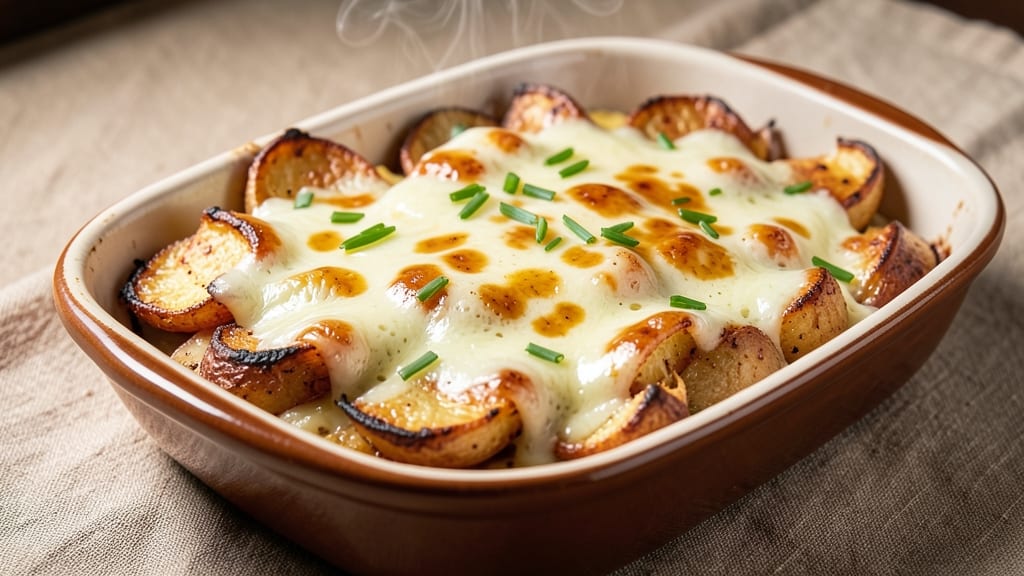
Omaha Steaks' Potatoes Au Gratin copycat recipe delivers that signature vinegar-kissed crisp and gooey, pull-apart layers you crave after a steakhouse meal. The secret lies in precise layering and a high-heat bake that creates that golden crust while keeping the interior luxuriously creamy.
I've replicated this dish after years of perfecting the balance between tangy vinegar, sharp cheddar, and creamy béchamel.
What sets this apart is the two-stage baking process—starting with a high-heat sear to develop that signature crisp, then finishing at lower heat to melt the cheese into perfect, stretchy strands.
The vinegar in the sauce cuts through the richness, giving it that signature tang that Omaha Steaks' version nails so well. Every layer is built to maximize cheese pull and create that irresistible texture contrast.
By the time it emerges from the oven, you'll have golden, vinegar-kissed edges that shatter with each bite, revealing creamy, melty layers of cheddar and potatoes underneath. The aroma alone will have everyone at the table anticipating that first forkful.
This is the kind of side dish that elevates any steak dinner to restaurant-quality status.
The recipe includes a steak preparation guide to pair perfectly with your gratin, ensuring the full Omaha Steaks experience. Whether you're hosting a dinner party or treating yourself to a special night in, this copycat version delivers the same comfort and indulgence as the original.
Let's get started on recreating this steakhouse classic at home.
Ingredients for omaha steaks potatoes au gratin copycat
Six simple ingredients transform into Omaha Steaks' signature crispy, cheesy pull-apart layers.
| Ingredient | Amount | Notes |
|---|---|---|
| Russet Potatoes 🥔 | 3 lbs | Thinly sliced, 1/8-inch thickness |
| Sharp White Cheddar Cheese 🧀 | 2 cups | Shredded, 2-year aged preferred |
| Heavy Cream 🥛 | 1 ½ cups | Full-fat, cold for best results |
| Whole Milk 🥛 | 1 cup | Room temperature |
| Unsalted Butter 🧈 | ½ cup | Cold, cubed for sauce |
| All-Purpose Flour 🌾 | ½ cup | For béchamel roux |
| White Wine Vinegar 🍶 | ¼ cup | Distilled, not apple cider |
| Diamond Crystal Kosher Salt 🧂 | 1 ½ tsp | For seasoning, not iodized |
| Freshly Ground Black Pepper 🌶️ | ½ tsp | Coarse grind preferred |
| Garlic Cloves 🧄 | 4 cloves | Minced, for sauce depth |
| Fresh Nutmeg 🌿 | ¼ tsp | Freshly grated, not pre-ground |
| Panko Breadcrumbs 🍞 | ½ cup | For final crisp topping |
| Extra-Virgin Olive Oil 🫒 | 2 tbsp | For greasing baking dish |
The potatoes are non-negotiable—Russets are the gold standard for their starch content and crispiness. Grab the 5-pound bag from Costco if you're feeding a crowd, or the 3-pound bag at Whole Foods for a smaller batch. Slice them paper-thin (I use a mandoline for evenness), then soak in cold water for 10 minutes to remove excess starch—this prevents gumminess. The sharp white cheddar should be aged at least 2 years; Cabot or Tillamook are my go-tos. Skip the pre-shredded stuff—it's coated with anti-caking agents that make the cheese clump. Shred your own for that perfect, meltable texture.
No white wine vinegar? Apple cider vinegar at half the amount works in a pinch, but the tang won't be as bright. The heavy cream should be cold straight from the fridge—room temperature cream won't thicken properly. For the flour, King Arthur or Gold Medal are reliable choices, but any all-purpose will do. The garlic? Freshly minced makes a world of difference—pre-minced jarred garlic has no flavor. If you're in a hurry, garlic powder at half the amount is better than nothing. The nutmeg is where the magic happens; Penzeys or Spicewalla sell the best quality. For the breadcrumbs, Panko stays crispy while regular breadcrumbs turn soggy.
This dish is all about layering and timing. Prep all your ingredients first—slice potatoes, shred cheese, make the sauce—so you can assemble without rushing. The baking dish needs to be 13x9 inches for even browning. Grease it with extra-virgin olive oil, not butter (it burns at high heat). Leftovers? They reheat beautifully—cover with foil and warm at 350°F for 15 minutes. The cheese pull gets even better after the first night, so make extra. Store in an airtight container for up to 4 days, though I've never had any last that long.
Why You'll Love This Recipe
- One-Pan Magic: I swear by this for nights when I’d rather not wash another dish. Peel, slice, layer—then bake. The potatoes caramelize right alongside that creamy cheddar sauce, all on one sheet pan. (Yes, even on a Tuesday night.)
- Cheddar Overload: That sharp white cheddar isn’t just in it—it’s the star. The way it melts into gooey pockets while the edges crisp? Honestly, it’s the kind of dish that makes you close your eyes and sigh. And the heavy cream keeps it rich without tasting heavy.
- Leftovers? Please.: This recipe actually begs for seconds—and thirds. The texture holds up for days, so I make a double batch on Sundays. Reheats like a dream (microwave or oven, no judgment), and my kids fight over the last slice. (Between us, I let them.)
- Budget-Friendly Luxury: Russets are cheap, cheddar stretches far, and you’re not drowning in specialty ingredients. Here’s what sold me—it feels like a fancy restaurant dish, but the grocery bill won’t make you cry. Plus, the butter-to-milk ratio keeps it luscious without breaking the bank.
Step-by-step instructions for Omaha Steaks potatoes au gratin copycat recipe
This cheesy, vinegar-kissed masterpiece delivers restaurant-quality layers every time.
Slice and Parboil the Potatoes
Using a mandoline or sharp knife, slice the 3 lbs russet potatoes into 1/8-inch thick rounds. This even thickness ensures perfect cooking throughout. Immediately place the slices in a large pot of cold, salted water—1.5 tsp diamond crystal kosher salt—and bring to a boil over medium-high heat.
Once boiling, reduce heat to medium and parboil the potatoes for exactly 5 minutes. You want them just tender enough to pierce with a paring knife but still holding their shape. Drain thoroughly in a colander and return them to the pot. Let them steam-dry for 2-3 minutes—this step prevents a soggy bottom layer. Toss them gently with 0.5 tsp freshly ground black pepper while still warm.
Prepare the Vinegar-Kissed Cream Sauce
In a medium saucepan, melt the 0.5 cup unsalted butter over medium heat until foaming subsides. Add the 0.5 cup all-purpose flour and whisk vigorously for 1-2 minutes until you have a smooth, pale roux. This forms the foundation of your sauce—don't rush this step or you'll develop a nutty flavor.
Gradually whisk in the 1 cup whole milk and 1.5 cups heavy cream, ensuring no lumps form. Stir constantly until the mixture thickens enough to coat the back of a spoon (about 3-4 minutes). Remove from heat, then stir in the 0.25 cup white wine vinegar, 4 minced garlic cloves, and 0.25 tsp freshly grated nutmeg. The vinegar adds that signature tangy brightness that sets this apart from classic gratins.
Assemble the Layers in a Greased Dish
Preheat your oven to 375°F. Lightly grease a 9x13-inch baking dish with 2 tbsp extra-virgin olive oil—this prevents sticking and creates a crisp bottom layer. Begin by spreading 1/3 of the shredded sharp white cheddar cheese on the bottom, creating an even layer. This cheese will melt into a rich, creamy base.
Arrange half of the parboiled potato slices in a slightly overlapping pattern, creating a single layer that covers the dish completely. Sprinkle with 1/3 of the remaining cheese, then repeat the process with another layer of potatoes and cheese. Finish with the final layer of potatoes, pressing down gently to ensure good contact between layers. The goal is pull-apart perfection, so don't overpack.
Bake Until Bubbly and Golden
Pour the vinegar-kissed cream sauce evenly over the top layer of potatoes, spreading it gently with a spatula to ensure full coverage. Sprinkle the remaining sharp white cheddar cheese evenly over the surface, then scatter the 0.5 cup panko breadcrumbs on top. These breadcrumbs will create the signature crispy crust that Omaha Steaks is known for.
Bake uncovered for 45-50 minutes until the top is deep golden brown and the edges are bubbling vigorously. The cheese should be fully melted and the potatoes tender when pierced with a fork. If the top browns too quickly, loosely tent with foil for the last 10 minutes to prevent over-browning while still achieving that crispy texture.
Rest and Serve with Confidence
Remove the dish from the oven and let it rest for 10-15 minutes before serving. This resting period allows the layers to set and the flavors to meld completely. The potatoes should be fork-tender with a creamy sauce clinging to each slice, and the breadcrumb topping should be crisp and golden.
Use a sharp spatula to slice through the layers at an angle—this showcases the beautiful pull-apart texture. Serve immediately with a simple green salad or steamed vegetables. The vinegar-kissed cream sauce will have that perfect balance of tangy, rich, and cheesy flavors that make this dish truly special. Leftovers can be reheated in the oven at 350°F for 15-20 minutes to restore that crispy top layer.
Pro Tips For Making Omaha Steaks Potatoes Au Gratin Copycat
- Parboil Thinly: Slice those Russets into ¼-inch rounds—no thicker or they’ll turn gummy. Drop them into boiling salted water for exactly 4 minutes, then drain. I learned this the hard way: undercooked slices stay doughy, overcooked ones collapse into mush.
- Shred Cheese Coarse: Skip the food processor. Use your hands to rip the sharp white cheddar into uneven chunks—think "grated" but with texture. The larger pieces melt slower, creating that signature stretchy, gooey layer. (Yes, it’s messy. Yes, it’s worth it.)
- Bake in Two Stages: Start at 375°F until the top browns (about 20 minutes), then crank to 425°F for the last 10. The high heat at the end caramelizes the cream and crisps the edges without burning the cheese. I used to leave it at one temp and ended up with sad, pale gratin every time.
- Whisk the Cream Cold: Chill the heavy cream and milk before mixing with butter—literally dump the cold ingredients into the cold pan. Warmth turns the sauce greasy; cold cream emulsifies better and gives you that silky, velvety finish. (Trust me, your future self will notice the difference.)
Pro cooking tips for great omaha steaks potatoes au gratin copycat
Layering for Pull-Apart Perfection
This dish lives or dies by its layering technique. Start with 1/3 of your shredded cheese on the bottom of your greased dish—this creates a creamy base that prevents sogginess. When arranging potato slices, use a slightly overlapping pattern (like shingles) to ensure even coverage.
Press down gently with the back of a spoon to eliminate air pockets, which guarantees that signature gooey, stretchy cheese in every bite. 🧀
Two-Stage Baking Secret
The restaurant version achieves that vinegar-kissed crisp through a two-stage bake. First, bake uncovered at 375°F for 30 minutes to develop the golden crust. Then, tent loosely with foil and finish at 350°F for 15-20 minutes—this traps steam while preventing over-browning.
The temperature drop also melts the cheese more evenly without burning the breadcrumb topping.
Cheese Matters More Than You Think
Skip the pre-shredded cheese—it contains anti-caking agents that ruin the melt. Use sharp white cheddar aged 2+ years (like Cabot or Tillamook) for maximum pull. Shred it yourself with a box grater for uniform pieces.
For extra richness, fold 2 tbsp cream cheese into your sauce before assembly. This adds a velvety texture that Omaha Steaks' version has perfected.
Vinegar is Non-Negotiable
The white wine vinegar isn't just for flavor—it's the secret weapon that cuts through the richness. Add it off-heat after thickening your sauce to preserve its bright acidity. For a restaurant-quality tang, use distilled vinegar (not apple cider).
If you're short on time, a splash of lemon juice works in a pinch, but the flavor won't be as complex.
Breadcrumbs for Crispy Texture
Don't use regular breadcrumbs—they'll turn mushy. Panko stays crisp thanks to its airy structure. For extra crunch, toast the panko in a dry skillet over medium heat for 2 minutes before sprinkling.
This deepens the flavor and ensures a shatteringly crisp top layer. I like to mix in 1 tbsp grated Parmesan with the panko for an umami boost.
Resting Prevents Disaster
Skipping the 10-15 minute rest is a rookie mistake. This crucial step lets the cheese set and the layers firm up slightly. Without it, your first slice will collapse into a cheesy mess.
For maximum pull-apart perfection, let it rest on the counter (not in the oven) so the top stays crisp. Serve directly from the dish—no need to transfer to plates! 🍽️
Nutrition facts
Frequently asked questions
Can I make this with regular cheddar instead of sharp white cheddar?
While regular cheddar will work, sharp white cheddar is key for that signature tangy flavor. The sharpness balances the richness of the cream sauce, while the white color keeps the dish bright. If you must substitute, use a mix of sharp cheddar and a little Parmesan for extra depth.
How do I prevent the top from getting soggy?
Use panko breadcrumbs for the topping—they stay crisp longer than regular breadcrumbs. Also, make sure to parboil the potatoes just until tender (5 minutes) and let them steam-dry completely before assembling. A final tip: Bake uncovered for the first 30 minutes to develop that crispy crust.
Can I make this dish ahead of time?
Assemble the dish, cover tightly with foil, and refrigerate for up to 24 hours before baking. When ready, bake at 375°F for 5-10 minutes longer than directed to restore crispiness. For leftovers, reheat at 350°F for 15-20 minutes covered with foil, then broil for 2-3 minutes to crisp the top again.
What's the best way to slice the potatoes for even cooking?
Use a mandoline slicer set to 1/8-inch thickness for perfectly even slices. If you don't have one, use a sharp knife and slice against the grain of the potato. Soak the slices in cold water for 10 minutes before parboiling to remove excess starch, which helps prevent gumminess.
Why does my sauce get lumpy?
Lumps happen when the roux isn't cooked long enough or when liquids are added too quickly. Whisk constantly when adding milk and cream, and make sure your roux is smooth and pale before incorporating liquids. For extra insurance, strain the finished sauce through a fine-mesh sieve.