Side Dishes
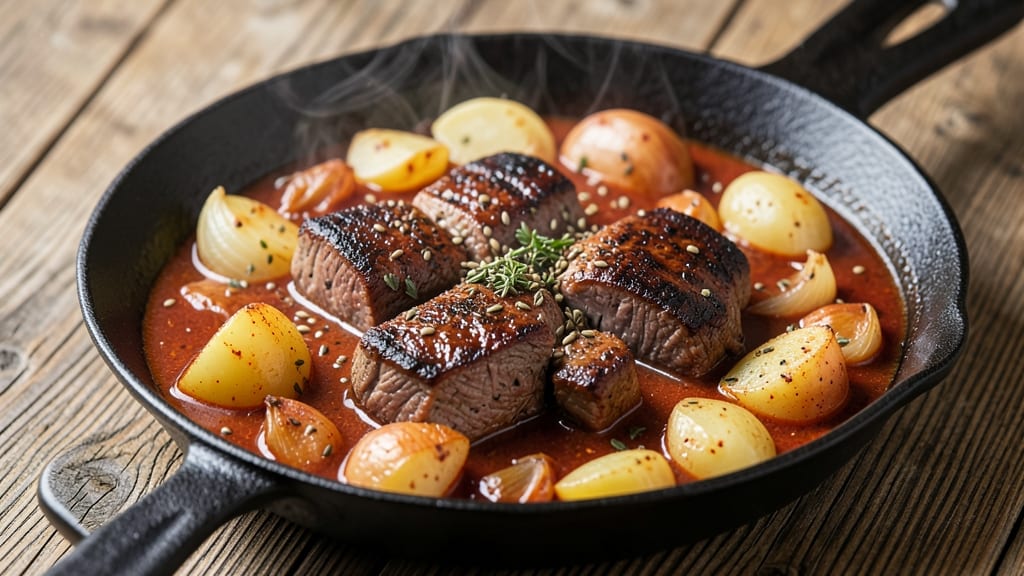
This potato goulash recipe transforms humble ingredients into a deeply satisfying Hungarian stew that warms the soul with its rich, paprika-kissed flavors. The secret lies in slow-cooked beef that melts into tender shreds, paired with hearty potatoes that soak up every layer of smoky, aromatic sauce.
I first made this version during a chilly autumn evening when I needed comfort food that felt special—no shortcuts, just time and patience.
The beauty of goulash is in its balance: earthy paprika provides warmth, caraway adds depth, and marjoram brightens the dish without overpowering. Unlike many stews, this one builds flavor gradually as the meat browns and the potatoes soften, creating a texture that’s both rustic and refined.
The key is letting it simmer low and slow, allowing all the spices to meld into a cohesive, velvety sauce that coats every bite.
By the time you serve it, you’ll have a steaming bowl of goulash with tender beef that falls apart at the touch, potatoes that hold their shape yet absorb the rich flavors, and a sauce so deeply seasoned it tastes like a hug in stew form.
This is the kind of dish that improves with leftovers—perfect for meal prep or feeding a crowd when everyone gathers around the table.
Serve it with crusty bread to soak up every last drop of that paprika-infused goodness, or pair it with a simple green salad for balance. The recipe scales easily, so double it for company or freeze portions for those nights when you crave this hearty comfort.
Let’s get cooking—your kitchen will smell like home in no time.
Ingredients for potato goulash
Just 15 simple ingredients for a stew that tastes like home.
| Ingredient | Amount | Notes |
|---|---|---|
| Beef Chuck Roast 🥩 | 2 lb | Cut into 1-inch cubes |
| Yellow Onions 🧅 | 2 whole | Medium, sliced into half-moons |
| Russet Potatoes 🥔 | 3 lb | Peeled, cut into 1-inch chunks |
| Sweet Paprika 🌶️ | 2 tbsp | Hungarian if available |
| Ground Caraway Seeds 🌿 | 1 tbsp | Toasted for deeper flavor |
| Dried Marjoram 🍃 | 1 tbsp | Or substitute dried oregano |
| Garlic Cloves 🧄 | 6 cloves | Minced, fresh preferred |
| Tomato Paste 🍅 | ½ cup | Squeeze tube or canned |
| Beef Broth 💧 | 4 cups | Low-sodium preferred |
| Red Wine 🍷 | 1 cup | Dry, like Cabernet Sauvignon |
| Bay Leaves 🍃 | 2 whole | Remove before serving |
| Salt 🧂 | 1 ½ tsp | Kosher or sea salt |
| Black Pepper 🌶️ | 1 tsp | Freshly ground preferred |
| Extra-Virgin Olive Oil 🫒 | 2 tbsp | For browning beef |
| Crusty Bread 🍞 | 6 slices | For serving, optional |
The beef is non-negotiable here—chuck roast melts into tender shreds, while sirloin stays tough. Grab it from the butcher section at Whole Foods or your local market, where they often have it pre-cubed for convenience. If you're buying a whole roast, ask for it to be cut into 1-inch chunks (the butcher can do this for free). For the paprika, Hungarian sweet paprika gives that authentic flavor, but regular sweet works too. I always buy mine in bulk from Penzeys—it keeps for months and makes every stew taste special.
No red wine? Beef broth with a splash of balsamic vinegar works just as well. The caraway seeds need to be toasted—just dry-toast in a pan for 30 seconds until fragrant. Short on marjoram? Dried oregano at half the amount does the trick. For the tomato paste, those little squeeze tubes from Trader Joe's are perfect—no waste, and they keep forever. The potatoes should be russets or Yukon golds—they hold their shape better than red potatoes. If you're prepping ahead, you can even parboil them first to speed up cooking time later.
This goulash tastes even better the next day—3-4 days in the fridge, no problem. For longer storage, freeze portions in airtight containers for up to 3 months. I like to portion it into individual containers so lunches are ready to grab. The sauce thickens as it cools, so add a splash of broth if it's too thick when reheating. Serve with that crusty bread to soak up every last drop of that paprika-infused goodness—trust me, you'll want seconds.
Why You'll Love This Recipe
- One-Pot Magic: I swear by this recipe—just brown the beef, toss in the onions and potatoes, and let it simmer. No extra pans, no fuss, and honestly? That deep, smoky paprika aroma fills the whole house while you do other stuff.
- Deep, Earthy Richness: Between the beef’s slow-braised tenderness and those caraway seeds (trust me, they’re the secret), every bite has layers. The potatoes soak up all that savory goodness—crispy edges, creamy insides—it’s the kind of dish that makes you groan with satisfaction.
- Leftovers for Days: This recipe practically begs to be made in bulk. The flavors only get better after a day or two in the fridge, and reheats like a dream. I’ve fed my whole family for three nights straight with one batch—no takeout needed.
- Budget-Friendly Feast: Beef chuck roast is affordable, and potatoes stretch it into a hearty meal. I’ll be real: this is my go-to when I need to feed a crowd without breaking the bank. Plus, the spices cost pennies but make all the difference.
Step-by-step instructions for potato goulash
Let's create this rich Hungarian stew with layers of flavor and tender meat.
Brown the Beef Chuck Roast
Heat the 2 tablespoons extra-virgin olive oil in a large Dutch oven over medium-high heat until shimmering. Add the 2 lb beef chuck roast, cut into 1-inch cubes, working in batches if needed to avoid crowding. Let the beef sear undisturbed for 3-4 minutes per side until deeply browned and developed a caramelized crust. This step builds the foundation of flavor—don't rush it.
Once browned, remove the beef with a slotted spoon and set aside. You'll notice the beef releases easily when properly browned. The pan should have a nice layer of browned bits (fond) at the bottom—this is pure flavor waiting to be incorporated into the stew. If your pan isn't hot enough, the beef will steam instead of brown, so adjust the heat as needed.
Sauté the Aromatics and Build the Base
In the same Dutch oven, add the 2 whole yellow onions, sliced into half-moons, and cook over medium heat for 5-6 minutes until softened and beginning to caramelize. Add the 6 cloves minced garlic and cook for another 30 seconds until fragrant—you'll smell that wonderful garlic aroma filling your kitchen.
Stir in the 2 tablespoons sweet paprika and cook for 1 minute, allowing the spices to toast slightly and release their aroma. Add the 1 tablespoon ground caraway seeds and 1 tablespoon dried marjoram, stirring constantly for 30 seconds to toast the spices. This step develops the complex, earthy flavors that define goulash. The spices should be warm but not burning—if they darken too quickly, reduce the heat slightly.
Deglaze and Simmer the Stew
Pour in the 1 cup red wine and scrape up all those flavorful browned bits from the bottom of the pot with a wooden spoon. This deglazing step captures all the meaty goodness that would otherwise stick to the pan. Let the wine simmer for 3-4 minutes until reduced by half, allowing the alcohol to cook off and the flavors to concentrate.
Add the 0.5 cup tomato paste, stirring to combine completely. Pour in the 4 cups beef broth and bring the mixture to a gentle simmer. Return the browned beef to the pot, along with the 2 whole bay leaves, 1.5 teaspoons salt, and 1 teaspoon black pepper. The liquid should just cover the beef—if it's too thin, reduce slightly by simmering uncovered for a few minutes.
Cook the Potatoes Until Tender
Add the 3 lb russet potatoes, peeled and cut into 1-inch chunks, to the stew. The potatoes should be mostly submerged in the liquid. Bring the mixture back to a gentle simmer, then reduce heat to low and cover partially. Let it cook for 45-50 minutes, stirring occasionally, until the beef is fork-tender and the potatoes are easily pierced with a fork.
Here's the thing—don't lift the lid too often. Each time you peek, you lose heat and moisture. The stew should bubble gently but not vigorously. The potatoes are done when they're tender all the way through but still hold their shape slightly. If the stew gets too thick, add a splash of water or broth to maintain the right consistency. The flavors will deepen and meld beautifully during this cooking time.
Finish and Serve with Crusty Bread
Remove the 2 bay leaves before serving. Taste the goulash and adjust the seasoning if needed—you might need a bit more salt or pepper to balance the flavors. The stew should be rich, slightly tangy from the wine, and deeply flavorful from the paprika and spices.
Ladle the hot goulash into bowls and serve immediately with 6 slices crusty bread on the side. The bread is perfect for soaking up all that delicious broth. This hearty stew tastes even better the next day as the flavors continue to develop, so consider making extra for leftovers. The combination of tender beef, creamy potatoes, and aromatic spices makes this goulash a true comfort food classic.
Pro Tips For Making Potato Goulash
- BROWN THE MEAT FIRST: Don’t skip searing the chuck roast—even if you’re in a hurry. The Maillard reaction here isn’t just for show; it builds deep, meaty flavor that turns a simple goulash into something rich and satisfying. Use a Dutch oven, high heat, and let those fat droplets sizzle for 5-7 minutes per side before you even think about adding onions.
- PEEL AND CUBE POTATOES UNIFORM: Russets break unevenly, and that’s a problem when you want every bite to cook at the same pace. Cut them into 1-inch chunks, then peel them after cubing—this keeps the knife work cleaner and ensures they soften together, not turn to mush while some stay raw. (Yes, I’ve learned this the hard way.)
- TOAST THE PAPRIKA AND CARAWAY: Skip the pre-ground spices—this isn’t the time for convenience. Dry-toast the sweet paprika and ground caraway seeds in the Dutch oven for 30 seconds after browning the meat. The aroma alone changes the game, and the flavors meld better with the onions. (Your nose will thank you.)
- ADD POTATOES LAST, THEN COVER: I used to dump everything in at once, and the potatoes would steam instead of caramelize. Wait until the beef is halfway cooked and the onions are soft before adding them, then immediately cover the pot and simmer on low. The trapped steam keeps them tender without turning to glue. (Low and slow is the way—no rushing.)
Troubleshooting your potato goulash
Beef Not Browning
If your beef chunks aren't browning properly, your pan might not be hot enough or the meat could be too crowded. Work in batches with 1-inch cubes for even browning—never more than ½ inch thick per layer.
I use a cast-iron Dutch oven from Lodge because it retains heat perfectly. Preheat your pan over medium-high heat for 3-4 minutes before adding oil—you'll see the oil shimmer like water before it boils. 🔥
Sauce Too Thin
If your goulash sauce is watery, the potatoes are likely releasing too much starch. Start by simmering the stew uncovered for 10-15 minutes to reduce the liquid naturally. For extra thickening, mash 1-2 potatoes with a fork and stir them back in—their starch will help bind the sauce.
I also keep a small bowl of cornstarch slurry (1 tbsp cornstarch + 2 tbsp cold water) on hand for emergencies. 💡
Potatoes Overcooking
Potatoes that turn mushy usually mean they're overcooked or the stew simmered too vigorously. To prevent this, add potatoes when the beef has 20-25 minutes of cooking left. If the stew is too thick, add ½ cup beef broth to maintain moisture.
For extra insurance, parboil the potatoes for 5 minutes before adding them to the stew—this jumpstarts their cooking time. 🥔
Spices Too Overpowering
If the paprika or caraway taste harsh, you likely used too much or didn't toast them properly. For the paprika, use 1 tbsp instead of 2 and toast it for just 30 seconds in the pan—this mellows its intensity.
The caraway seeds should be toasted until fragrant but not burnt (about 30 seconds). Taste as you go: if the spices dominate, add a pinch of sugar to balance the bitterness. 🌶️
Meat Staying Tough
Tough beef usually means it wasn't cooked long enough or the heat was too high. Chuck roast needs at least 1.5 hours of simmering to become tender. After browning, reduce heat to low and maintain a gentle simmer—you should see small bubbles occasionally.
For extra tenderness, add 1 cup hot water during the last 30 minutes of cooking to create steam that breaks down the fibers. 🥩
Wine Smell Lingers
If your goulash still tastes like alcohol, the wine didn't reduce enough. Always simmer the wine until it's reduced by half (about 3-4 minutes). For a stronger flavor without the alcohol, substitute with 1 cup beef broth + 1 tbsp balsamic vinegar**.
The vinegar adds depth without the sharpness of raw wine. 🍷
Nutrition facts
Frequently asked questions about potato goulash
Can I make this goulash without red wine?
Replace the 1 cup red wine with 1 cup beef broth plus 1 tablespoon balsamic vinegar for the same rich depth of flavor. The vinegar mimics the wine's acidity while adding complexity without alcohol. For extra richness, add 1 teaspoon soy sauce to enhance umami.
How do I store leftover goulash?
Store in an airtight container in the fridge for 3-4 days or freeze for up to 3 months. When reheating, add 2-3 tablespoons broth to restore moisture—leftovers often thicken as they cool. For best texture, reheat on low heat or in the microwave with a damp paper towel covering.
What's the best cut of beef for goulash?
Chuck roast is ideal because it's flavorful and becomes tender when slow-cooked. Brisket or stew meat also work well. Avoid lean cuts like sirloin—they stay tough. If you can't find chuck, ask your butcher for beef for stewing, which is typically pre-cut for this purpose.
Can I substitute potatoes?
Yes! Yukon golds or red potatoes work well, though russets hold their shape best. For extra creaminess, add ½ cup diced carrots or bell peppers with the potatoes. Avoid waxy potatoes like red potatoes if you prefer firmer texture—they break down faster.
Why does my goulash taste bland?
Bland flavor usually means the spices weren't toasted enough or the beef didn't brown properly. Always toast paprika and caraway seeds for 30 seconds to release their aromas. For extra depth, add 1 teaspoon smoked paprika or a pinch of sugar to balance acidity. Taste as you go—adjust salt and pepper gradually.