Desserts
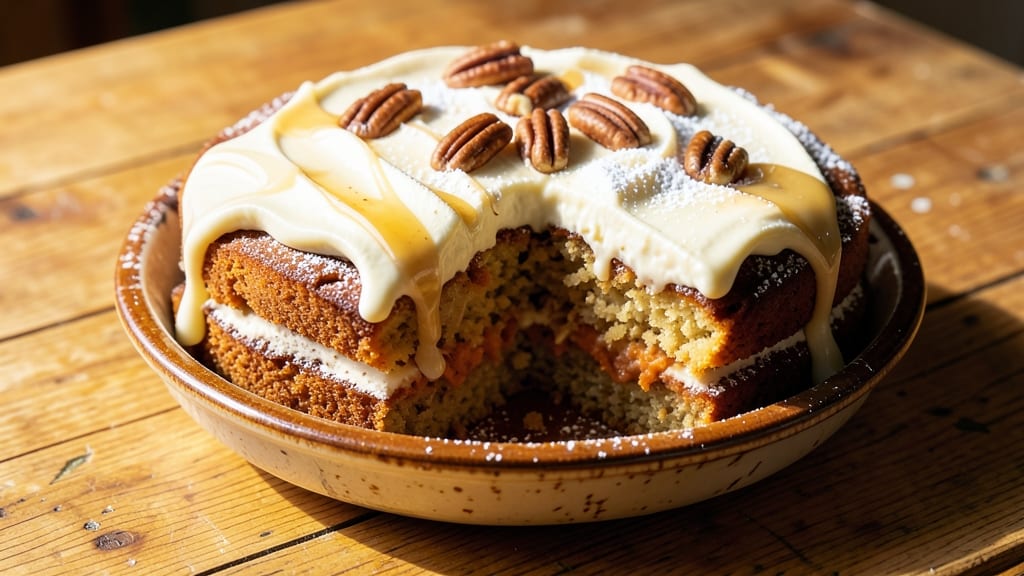
My grandma’s famous sweet potato butter cake recipe delivers the cozy, spiced layers of her kitchen—each bite bursting with moist cake and a dreamy, velvety frosting.
The secret lies in blending sweet potatoes with butter and brown sugar, creating a texture that's impossibly tender yet sturdy enough to hold that signature spiced frosting.
I've baked this cake for holidays and family gatherings for decades, and every slice reminds me of Sunday afternoons spent in her sunlit kitchen.
The magic happens in the mixing: creaming butter and sugar until light, then folding in mashed sweet potatoes for natural sweetness and moisture without overpowering the cake's flavor. A pinch of cinnamon and nutmeg in both the cake and frosting elevates it from ordinary to legendary.
My grandmother always said, "The frosting should taste like a hug"—and it does, with its perfect balance of sweetness and warmth.
What you'll end up with is a cake that's moist enough to stay fresh for days, with a crumb so fine it practically dissolves. The spiced frosting adds a layer of complexity, making each bite feel like a celebration.
This isn't just dessert—it's a centerpiece, a tradition, and a taste of home wrapped in golden layers.
Perfect for holidays, birthdays, or when you simply need a reason to gather loved ones around the table. The recipe scales beautifully, so you can make it for a crowd or save half for later—though I can't promise it'll last that long.
Here's how to recreate Grandma's famous cake in your own kitchen.
Ingredients for grandma's famous sweet potato butter cake
Sweet potatoes, butter, and brown sugar—Grandma’s secret to that legendary moist crumb.
| Ingredient | Amount | Notes |
|---|---|---|
| Sweet Potatoes 🍠 | 2 cups | Canned, mashed or pureed |
| Unsalted Butter 🧈 | 1 cup | Softened, full-fat preferred |
| Light Brown Sugar 🍚 | 2 cups | Packed, not granulated |
| Large Eggs 🥚 | 3 whole | Room temperature |
| All-Purpose Flour 🌾 | 2 ½ cups | Spooned and leveled |
| Baking Powder 🍞 | 2 tsp | Not baking soda |
| Ground Cinnamon 🌿 | 2 tsp | Freshly ground preferred |
| Ground Nutmeg 🌿 | ½ tsp | Freshly grated better |
| Salt 🧂 | ½ tsp | Fine sea salt |
| Vanilla Extract 🌸 | 1 tbsp | Pure, not imitation |
| Milk 🥛 | 1 cup | Whole milk preferred |
| Powdered Sugar 🍚 | 4 cups | For frosting, sifted |
| Heavy Cream 🥛 | ½ cup | Cold for frosting |
| Ground Ginger 🌶️ | ½ tsp | For frosting warmth |
Sweet potatoes are the soul of this cake. Canned saves time, but fresh roasted gives the deepest flavor—peel, boil, and mash until completely smooth. Trader Joe’s has the best canned sweet potatoes, but any brand works if it’s labeled ‘mashed’ or ‘pureed’. The butter? Full-fat, unsalted is a must—none of that low-fat nonsense here. Brown sugar should be packed, not aerated, for that rich, caramel-like texture. I always double-check the baking powder—expired leavening means a dense cake. Bob’s Red Mill sells it in bulk if you’re worried about freshness.
No canned sweet potatoes? Roast your own—just peel, cube, and roast at 400°F until tender. Swap the milk for evaporated milk or buttermilk if you’re out of whole milk, but the cake won’t be quite as tender. For the frosting, powdered sugar is non-negotiable—granulated won’t dissolve right. The ginger adds warmth, but if you’re sensitive to spice, cut it to 1/4 tsp. And trust me, vanilla extract matters—none of that imitation stuff. If you’re feeling fancy, add a pinch of cardamom to the frosting for a hint of Grandma’s secret twist.
This cake stays moist for 5 days if wrapped tightly in plastic, but honestly? It’ll disappear faster. The frosting keeps for 3 days in the fridge—just rewhip it with a splash of milk if it gets stiff. For holidays, I make two cakes and freeze one. Wrap tightly in foil, then plastic, and it’ll thaw beautifully. Leftovers? Warm slices in the microwave for 10 seconds—the frosting melts into a dreamy puddle. And if someone asks for seconds? You’ve done your job right.
Why You'll Love This Recipe
- Sweet Potato Magic: The moment you blend those roasted sweet potatoes into the batter, that natural sweetness and creaminess takes over—no extra sugar needed. Honestly, the first time I made this, I nearly licked the bowl.
- Butter-Soft Crumb: That rich, velvety texture comes from the butter and brown sugar, but the real star is how the eggs bind everything together. It’s moist without being heavy, and every slice feels like a hug.
- Bakes Like a Dream: You’re not stuck with a dry cake—this one stays tender for days. I’ve pulled slices straight from the fridge for breakfast and they’re still perfect. (Yes, even on a Tuesday night.)
- Pantry Staple Power: Sweet potatoes, butter, flour—these are things you already have. Between us, I’ve made this for birthday cakes, potlucks, and lazy Sunday mornings. It’s my go-to when I need something reliable.
Step-by-step instructions for Grandma's famous sweet potato butter cake
Here's how to bake this legendary cake with layers so moist they'll make you swoon.
Prep the Sweet Potato Base
Start by draining and mashing the 2 cups of sweet potatoes until completely smooth—no lumps allowed. I like to use a potato masher or fork, but a food processor works too if you prefer. The texture should be like thick, velvety pudding. Let it cool completely before using, or the butter won't soften properly when mixed in later.
While the sweet potatoes cool, preheat your oven to 350°F and grease two 9-inch round cake pans. Line the bottoms with parchment paper for easy removal. The pans should be room temperature when you add the batter to prevent uneven baking.
Cream Butter and Sweeteners
In a large mixing bowl, combine the 1 cup of softened unsalted butter with the 2 cups of packed light brown sugar. Beat with an electric mixer on medium speed for 3-4 minutes until light and fluffy. You'll see the mixture nearly double in volume and turn pale—this incorporates air that makes the cake rise beautifully.
Add the 3 whole room-temperature eggs one at a time, mixing well after each addition. Then stir in the 1 tablespoon of vanilla extract. The batter should be smooth and slightly thick, like pudding. If it looks too stiff, don't worry—we'll loosen it up with the sweet potato mixture next.
Mix Dry Ingredients and Combine
In a separate bowl, whisk together the 2.5 cups of all-purpose flour, 2 teaspoons of baking powder, 2 teaspoons of ground cinnamon, 0.5 teaspoon of ground nutmeg, and 0.5 teaspoon of salt. Sift this mixture once to remove any lumps—this ensures your cake will be tender rather than dense.
Gradually add the dry ingredients to the butter mixture, alternating with the 1 cup of milk. Start and end with the flour mixture. Mix on low speed just until combined—you should still see some flour streaks. Then fold in the cooled sweet potato mixture until just incorporated. The batter will be thick but pourable.
Bake to Golden Perfection
Divide the batter evenly between the prepared cake pans. Tap the pans gently on the counter to release any air bubbles. Bake for 25-30 minutes, until a toothpick inserted in the center comes out clean. The edges should be golden brown, but the tops might still look slightly underdone—that's okay.
Let the cakes cool in their pans for 10 minutes, then transfer to a wire rack to cool completely. This resting period prevents the cakes from cracking when you remove them. While they cool, you can make the frosting—it needs time to chill before assembly.
Make the Spiced Frosting
In a medium bowl, beat the 4 cups of sifted powdered sugar with the 0.5 cup of cold heavy cream until smooth. Add the 0.5 teaspoon of ground ginger and mix well. The frosting should be thick enough to hold its shape but still spreadable. If it's too stiff, add a teaspoon of milk at a time until it reaches the right consistency.
Once the cakes are completely cool, level the tops if needed. Spread a thin layer of frosting on the bottom cake, then place the second cake on top. Frost the entire cake, then pipe any remaining frosting around the edges for a decorative touch. Chill for 30 minutes before slicing—this helps the frosting set properly for clean cuts.
Pro Tips For Making Grandma'S Famous Sweet Potato Butter Cake
- Boil Sweet Potatoes Until Fork-Tender: I learned this the hard way—boiling sweet potatoes until they’re actually soft (not just warm) makes all the difference. Cut them into even 1-inch chunks and cook them in salted water for 12-15 minutes until a fork slides in like butter. Overcooked? They’ll turn to mush in the cake. Undercooked? You’ll taste the raw starch. Aim for that sweet, creamy give.
- Whip Butter and Sugar Like Ice Cream: Don’t just mix the butter and brown sugar—whip them together until the mixture is pale and fluffy, like soft-serve. This lightens the texture and cuts through the sweet potato’s heaviness. Use a stand mixer for 3-4 minutes, scraping the bowl once. (Yes, it feels like overkill, but the cake will be worth it.)
- Don’t Overmix the Batter: Once you fold in the flour, stop mixing the second everything just combines. Overmixing develops gluten, and this cake is all about that tender, moist crumb. Use a spatula to gently fold—lumps are fine, but a dense, chewy texture isn’t.
- Bake in Two Rounds: This cake’s famous for a reason, but it’s heavy. Bake it in two 9-inch rounds (or one 10-inch) instead of one deep pan. The batter will rise evenly, and you’ll avoid a gummy center. Grease the pans well—butter + flour works, but add a sprinkle of flour to the greased bottom to prevent sticking. (Trust me, you’ll curse if you skip this.)
Regional styles of this recipe
Southern Comfort
This cake originated in the American South, where sweet potatoes were a staple crop and butter was plentiful. Grandma always said the key was "letting the sweetness shine," which meant using light brown sugar and freshly grated nutmeg—both signature flavors of Southern baking.
The frosting, spiced with ginger, echoes the warmth of classic Southern desserts like pecan pie. I remember her adding a pinch of cardamom sometimes, which gave it that extra cozy touch. 🌶️
Midwest Homestyle Twist
In the Midwest, this cake became a holiday staple, often served with vanilla ice cream or whipped cream. My grandmother's cousin in Ohio used to add chopped walnuts to the frosting for texture, while others in Indiana preferred a cream cheese glaze drizzled on top.
The Midwest version tends to be slightly denser, with whole milk instead of buttermilk, to handle colder climates better. I’ve made it both ways—trust me, the texture difference is noticeable!
New England Spiced Variation
Up north, the frosting gets a maple syrup swirl—just 2 tablespoons mixed into the powdered sugar—adding a caramel-like depth that pairs perfectly with the sweet potato’s natural sweetness. New England bakers also love topping the cake with toasted pecans or candied ginger for crunch.
The cooler climate makes the cake’s moistness even more appreciated during winter gatherings. I once made this version for Thanksgiving, and it disappeared faster than the pumpkin pie!
Texas-Style Butter Boost
In Texas, the cake gets a butter boost—some versions call for an extra ¼ cup of butter in the frosting, making it richer and more decadent. Texans also love adding orange zest to the cake batter for a bright citrus note that cuts through the sweetness.
The frosting might include a dash of cayenne for a subtle kick, balancing the spiced warmth. This version is a crowd-pleaser at Texas BBQ joints, where it’s often served alongside smoked brisket. 🔥
Modern Gluten-Free Adaptation
For those who can’t have gluten, swap the all-purpose flour for a 1:1 gluten-free baking blend like King Arthur’s. You’ll need to add ½ teaspoon xanthan gum to mimic the cake’s structure.
The sweet potatoes and butter still shine, but the texture becomes slightly denser—so I recommend baking it for 5-10 minutes longer to ensure doneness. The frosting stays the same, but the cake’s crumb is just as tender. This version proves tradition can adapt without losing its magic! ✨
Nutrition facts
Frequently asked questions
Why does this cake stay so moist for days?
The secret lies in the sweet potato butter base—mashed sweet potatoes add natural moisture and sweetness without making the cake dense. The butter and brown sugar create a tender crumb, while the milk keeps everything balanced. Wrapping tightly in plastic preserves freshness for 5 days or more!
Can I substitute fresh sweet potatoes for canned?
Roast 2 medium fresh sweet potatoes (peeled and cubed) at 400°F for 45 minutes until tender, then mash until completely smooth. Fresh gives deeper flavor but requires more prep time. Canned is fine for convenience—just drain well.
How do I fix a cake that's cracked on top?
Cracking usually means the oven was too hot or the cake cooled too quickly. Next time, check for doneness at 25 minutes and tent with foil if browning too fast. For fixing: spread a thin layer of warmed frosting over cracks, then chill for 10 minutes to set. The frosting will disguise it perfectly!
Is there a way to make this cake vegan?
Yes! Replace eggs with 3 tbsp flaxseed meal + 9 tbsp water (let sit 5 mins to thicken), use vegan butter, and swap milk for almond milk. For frosting, use coconut cream instead of heavy cream. The texture will be slightly denser but still delicious.
What's the best way to serve this cake?
Grandma always served it warm with a scoop of vanilla ice cream or a dollop of whipped cream. For holidays, try pairing with spiced apple cider or a cup of chai tea. The frosting's ginger notes complement both sweet and savory flavors—perfect with smoked meats too!