
Side Dishes
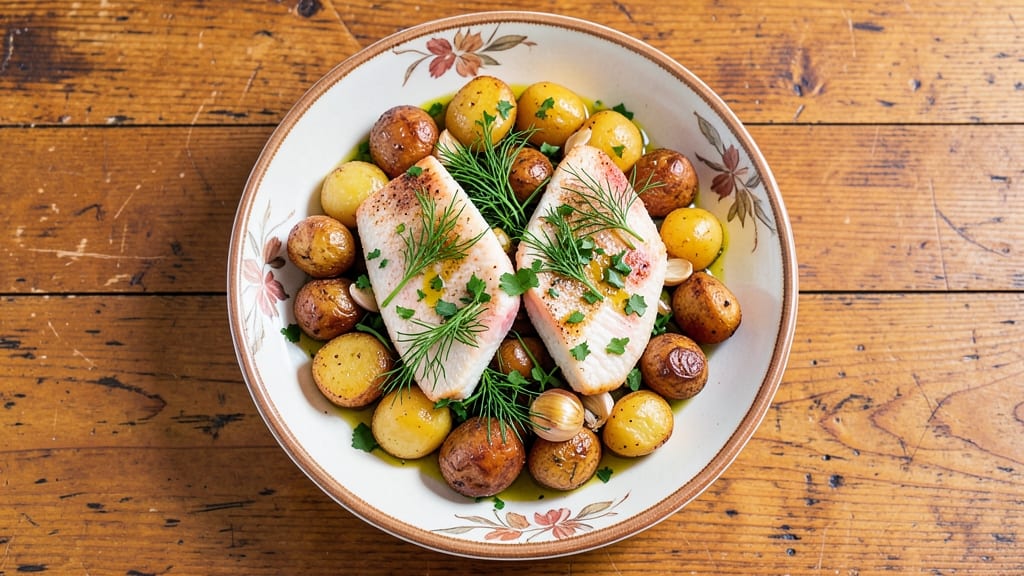
This haddock and potatoes recipe delivers a complete, restaurant-worthy meal in one pan—where flaky white fish meets crispy, herb-infused potatoes for a dish that’s both elegant and effortless.
The secret lies in baking the fish and potatoes together, allowing their flavors to meld while the potatoes develop a golden, crispy crust from the fish’s natural oils and seasoned breadcrumbs.
After years of perfecting this technique, I’ve found that using fresh haddock and Yukon Gold potatoes creates the ideal balance of tender fish and buttery, crispy spuds.
The beauty of this recipe is its simplicity—just a handful of ingredients and a single baking sheet transform simple ingredients into a foolproof meal that’s ready in about 30 minutes. The haddock stays moist and flaky, while the potatoes develop a satisfying crunch from the herb crust.
This method also minimizes cleanup, making it perfect for busy weeknights or when you want to impress guests without spending hours in the kitchen.
What you’ll end up with is a dish that’s rich in flavor and texture—crispy potatoes with a fragrant herb crust surrounding perfectly seasoned haddock that flakes easily. The aroma alone will have everyone at the table anticipating the first bite.
This recipe is designed to be adaptable, whether you’re serving it as a main course for two or scaling it up for a family dinner.
Pair it with a simple green salad or steamed vegetables to complete the meal, or serve it with a squeeze of lemon to brighten the flavors.
The combination of haddock and potatoes makes this dish both satisfying and versatile—ideal for pescatarians or anyone looking for a wholesome, protein-packed meal. Let’s get started!
Ingredients for haddock potato
Fresh haddock and Yukon Gold potatoes transform into a restaurant-worthy dish with just these 13 ingredients.
| Ingredient | Amount | Notes |
|---|---|---|
| Fresh Haddock Fillets 🐟 | 1 ½ lb | Skin-on, center-cut preferred |
| Yukon Gold Potatoes 🥔 | 2 lbs | Cut into 1-inch chunks |
| Extra-Virgin Olive Oil 🫒 | ¼ cup | For tossing potatoes |
| Fresh Dill 🌿 | ¼ cup | Chopped, stems removed |
| Fresh Parsley 🌿 | 0.15 cup | Chopped, flat-leaf preferred |
| Garlic Cloves 🧄 | 4 cloves | Minced, fresh preferred |
| Panko Breadcrumbs 🍞 | ½ cup | For crispy herb crust |
| Lemon Zest 🍋 | 1 tbsp | From 1 medium lemon |
| Lemon Juice 🍋 | 2 tbsp | Freshly squeezed |
| Sea Salt 🧂 | 1 ½ tsp | Kosher preferred |
| Ground Black Pepper 🌶️ | ½ tsp | Freshly cracked |
| Fresh Thyme Leaves 🌿 | 1 tbsp | Chopped, stems removed |
| Unsalted Butter 🧈 | 2 tbsp | Melted, for drizzling |
The haddock is the star here, so prioritize freshness and quality. Look for skin-on fillets at your local seafood counter or trusted fishmonger—the skin keeps the fillets intact during baking. If you can't find haddock, cod or halibut work as substitutes, though texture will differ slightly. For the potatoes, Yukon Golds are ideal for their buttery flavor and crispy texture, but Russets will work in a pinch. Most grocery stores carry these varieties, but Whole Foods or Trader Joe's often have the freshest selection. The herbs should be vibrant and fragrant—if your parsley or dill looks wilted, skip it and opt for dried at half the amount.
No fresh dill? Dried dill works at one-third the amount, but fresh is preferred for that bright, herby flavor. Running low on panko? Crushed cornflakes or regular breadcrumbs give a similar texture, though panko stays crispier. The lemon zest and juice can be swapped for white wine vinegar or apple cider vinegar if you're out of lemons, though fresh lemon adds a brightness that's hard to replicate. For the butter, European-style cultured butter adds extra richness, but any unsalted butter will do. If you're using pre-minced garlic from a jar, rinse it first to remove any excess garlic oil that can make the dish taste bitter.
Store any leftover haddock in an airtight container with a paper towel to absorb moisture, and it'll keep for up to 2 days in the fridge. The herb crust mixture can be prepped ahead and refrigerated for up to 1 day before baking. This dish reheats beautifully—just pop it in the oven at 350°F for 10-15 minutes until warmed through. For a make-ahead option, assemble the dish on the baking sheet, cover with foil, and refrigerate overnight before baking. The flavors will deepen even more after chilling, making it perfect for a stress-free dinner.
Why You'll Love This Recipe
- I’ll be real: this feeds four easily but scales up without breaking a sweat. Too busy for dinner? Make it ahead and reheat. Hosting? It’s fancy enough for company but still feels like your cooking. (Yes, even on a Tuesday night.)
- One-Pan Magic: Between us, this dish is that rare recipe where you use one sheet pan and still feel like a chef. Just slice the potatoes, lay the haddock on top, drizzle with olive oil, and let the oven do the work—no chopping boards, no extra pots, just clean-up simplicity.
- Herb-Kissed Crispiness: Honestly, the haddock comes out flaky and golden, while the Yukon Golds get that buttery, paper-thin crust—chef’s kiss. The fresh dill and parsley brighten every bite, so you’re not just eating fish and potatoes; you’re eating flavor.
- Weeknight or Guest Night: I’ll be real: this feeds four easily but scales up without breaking a sweat. Too busy for dinner? Make it ahead and reheat. Hosting? It’s fancy enough for company but still feels like your cooking. (Yes, even on a Tuesday night.)
Step-by-step instructions for herb-crusted haddock and potatoes
This one-pan method delivers flaky haddock and crispy potatoes with minimal cleanup.
Prepare the Potatoes and Herb Crust
Preheat your oven to 425°F. In a large bowl, combine the 2 lbs Yukon Gold Potatoes (cut into 1-inch chunks) with 0.25 cup extra-virgin olive oil, 1.5 tsp sea salt, and 0.5 tsp ground black pepper. Toss thoroughly until each potato is evenly coated. Spread the potatoes in a single layer on a parchment-lined baking sheet, leaving space between pieces for even cooking.
In a separate bowl, mix the 0.5 cup panko breadcrumbs, 0.25 cup chopped fresh dill, 0.15 cup chopped fresh parsley, 1 tbsp fresh thyme leaves, 1 tbsp lemon zest, and 4 minced garlic cloves. This herb mixture will create a fragrant crust that complements both the haddock and potatoes.
Roast the Potatoes and Prepare the Haddock
Roast the potatoes for 25 minutes until they begin to soften and develop golden edges. After 20 minutes, carefully flip each piece to ensure even browning. Meanwhile, pat the 1.5 lb fresh haddock fillets dry with paper towels—this step is crucial for achieving crispy skin. Season both sides generously with sea salt and ground black pepper, then drizzle lightly with lemon juice to enhance flavor.
When the potatoes have roasted for 25 minutes, remove them from the oven and spread the herb crust mixture evenly over the top. Return the potatoes to the oven and continue roasting for 5 more minutes to toast the crust while keeping the potatoes tender.
Sear the Haddock and Assemble the Dish
While the potatoes finish roasting, heat 2 tbsp unsalted butter in an oven-safe skillet over medium-high heat until it foams. Add the haddock fillets, skin-side down, and sear for 3-4 minutes until the skin is golden and crispy. Flip carefully and cook for another 2-3 minutes until the fish is opaque and flakes easily with a fork.
Remove the skillet from the heat and place it on the stovetop. Nestle the seared haddock fillets on top of the herb-crusted potatoes, spooning any melted butter from the skillet over the fish and potatoes. Return the entire pan to the oven for 5-7 minutes to finish cooking the haddock and warm everything through.
Serve with Fresh Herbs and Lemon
Transfer the one-pan dish to a serving platter, ensuring the crispy herb crust stays intact. Garnish with additional chopped fresh dill and a sprinkle of lemon zest for brightness. The potatoes should be tender with crispy edges, while the haddock will be flaky and infused with herbaceous flavor.
Serve immediately, as the dish is best enjoyed while the haddock is still warm and the herb crust is crisp. The combination of buttery potatoes and delicate haddock creates a harmonious balance of textures and flavors in every bite.
Pro Tips For Making Haddock Potato
- Dry the Haddock Thoroughly: Pat those fillets completely with paper towels before cooking—wet skin means steam instead of a crispy crust. I learned this the hard way when my haddock turned out soggy, no matter how hot the pan got.
- Parboil Potatoes First: Toss the Yukon Golds in boiling water for 3 minutes before roasting—it evens out cooking and keeps them tender without falling apart. (Yes, even if you’re impatient like me, this step makes a real difference.)
- Don’t Overcrowd the Pan: Cook the haddock in batches if needed—too many fillets at once will steam the potatoes and leave your fish greasy. I skip this when I’m lazy, but the dish is noticeably better when I don’t.
- Finish with Lemon Zest: Brighten the dish at the end with a sprinkle of lemon zest (not juice) over the haddock and potatoes—it cuts through the richness and adds a fresh pop. (Your future self will thank you for this tiny upgrade.)
Common mistakes when making this recipe
Overcooking the Fish
The most common mistake is letting the haddock overcook, which turns it dry and rubbery instead of flaky and moist. Haddock cooks quickly—once it reaches an internal temperature of 145°F, remove it immediately. I use a meat thermometer inserted into the thickest part to avoid guesswork.
Overcooking also happens when you skip the searing step and bake the haddock directly in the oven—this steams the fish instead of creating a crispy exterior. 🌡️
Uneven Potato Cooking
Potatoes often end up undercooked or burnt because they’re crowded too closely on the baking sheet. Leave at least ½ inch of space between each piece for even airflow. I also flip them at the 20-minute mark to ensure all sides crisp properly.
Using larger chunks (1.5-inch) instead of small dice helps them cook more uniformly without drying out.
Skipping the Drying Step
Wet haddock skin never crisps—it steams and stays soggy. Always pat the fillets very dry with paper towels before seasoning. I even let them sit for 5 minutes uncovered on a wire rack to evaporate extra moisture.
This step is non-negotiable for that perfect golden skin that locks in flavor. 🍋
Incorrect Herb Crust Timing
Adding the herb crust too early causes it to burn before the potatoes are done. Spread it over the potatoes only after they’ve roasted for 25 minutes, then return to the oven for just 5 more minutes.
This ensures the crust toasts without turning bitter. I also recommend pressing it gently onto the potatoes with a spoon to help it adhere.
Using Low-Quality Fish
Cheap or previously frozen haddock lacks the delicate texture needed for this dish. Always buy fresh, skin-on fillets from a trusted seafood counter. I ask for center-cut pieces—they’re thicker and less prone to breaking apart.
If you must use frozen haddock, thaw it in the fridge overnight and pat it extra dry to compensate for excess moisture.
Overcrowding the Pan
When assembling the final dish, resist the urge to pile everything high. Haddock fillets should sit side by side on the potatoes, not stacked. Overcrowding traps steam, making the fish mushy.
I arrange them in a single layer, skin-side up, with just enough room to spoon butter between them. This also ensures even browning when the pan returns to the oven. ⚡
Nutrition facts
Frequently asked questions
Can I use frozen haddock instead of fresh?
Frozen haddock works, but it requires extra care. Thaw it overnight in the fridge and pat it very dry with paper towels to remove excess moisture. This helps prevent soggy skin. For best results, use center-cut fillets and don't skip the drying step—it's crucial for crispiness.
What if I don't have Yukon Gold potatoes?
Russet or red potatoes work perfectly—just expect slightly different textures. Russets will be extra crispy, while red potatoes stay firmer. For best results, cut them into 1-inch chunks and roast at 425°F for the same 25 minutes before adding the herb crust. The flavor won't be identical, but it'll still taste delicious.
How do I know when the haddock is fully cooked?
The fish is done when it reaches an internal temperature of 145°F and flakes easily with a fork. Use a meat thermometer to avoid overcooking—haddock turns rubbery if left in the oven too long. For extra confidence, check the thickest part of the fillet near the bone.
Can I make this dish ahead of time?
Assemble the dish on the baking sheet, cover with foil, and refrigerate overnight. When ready to cook, bake at 425°F for 5-7 extra minutes to warm through. The flavors actually improve after chilling, making it perfect for meal prep. Just add a squeeze of fresh lemon before serving.
What's the best way to store leftovers?
Store leftovers in an airtight container with a paper towel to absorb moisture. Haddock stays fresh for 2 days in the fridge, while potatoes hold up for 3-4 days. Reheat at 350°F for 10-15 minutes until warmed through. For longer storage, freeze portions for up to 1 month—just thaw overnight before reheating.